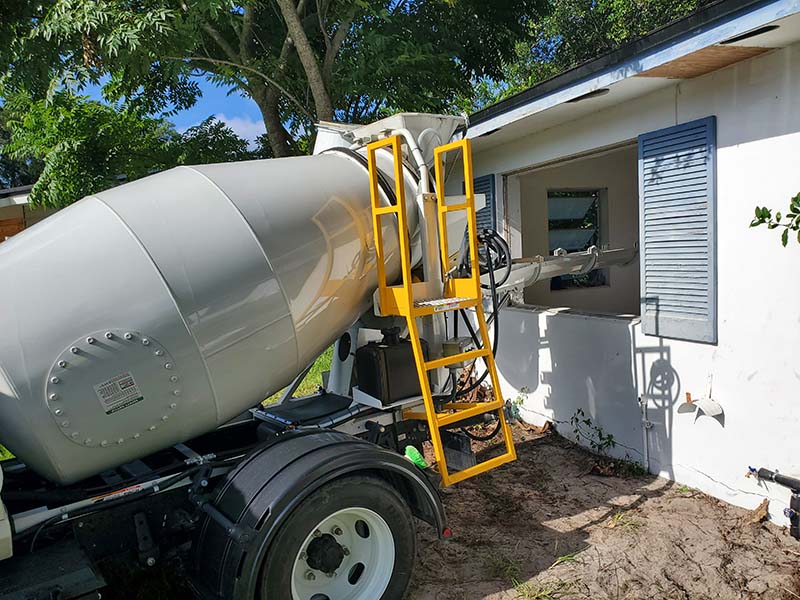
Top Concrete Delivery Companies for Your Construction Needs
Getting the concrete delivered on schedule and according to specifications is crucial when working on a construction project. Reliability, quality, and keeping your project on schedule are more important than simply pulling up with a truck. Since there isn’t a single “best” company that can handle every project, who are the go-to concrete delivery companies that can meet your needs? The leading competitors typically provide a good combination of experience, a reliable fleet, cutting-edge technology for precision, and a dedication to customer service.
Finding a provider who can work with the scope, schedule, and special needs of your particular project is what matters most. It’s important to have a clear idea of what your project actually requires before you even begin looking at companies. The details that affect everything from the type of concrete to the delivery logistics are more important than just the square footage you must cover. Calculating How Much Concrete You Need.
If you’re considering the benefits of using concrete delivery companies for your next project, you might find the article on why short load concrete delivery is perfect for small projects in Orlando particularly insightful. It discusses how these services can save time and reduce waste, making them an ideal choice for smaller jobs. To learn more, you can read the full article here: Why Short Load Concrete Delivery is Perfect for Small Projects in Orlando.
This is the easiest part to understand. The total volume of concrete that you require must be determined. This typically entails measuring the length, width, and depth of your forms and, depending on your area, converting that measurement into cubic yards or meters. Don’t forget to include a buffer for excessive excavation or waste.
Generally speaking, you should increase your calculated amount by 5–10%. The concrete mix specification. Concrete is not universally applicable. The application determines the strength (measured in psi or MPa), aggregate type and size, and any additives (such as admixtures for quicker setting or better workability). Strength requirements. Concrete in the 2500–4000 psi range is frequently needed for residential applications such as driveways, patios, and slabs.
Commercial & structural applications: Larger buildings’ foundations, beams, and walls usually require higher strengths, frequently 4000 psi and above, or even specialized mixes for particular engineering requirements. Heavy-duty applications: Strengths greater than 5000 psi may be required in industrial floors, bridges, & other high-stress locations. Aggregate factors. Size: Larger aggregate can be used for mass pours that require less finishing, while smaller aggregate works better for complex shapes or thin sections.
When considering the services offered by concrete delivery companies, it’s essential to understand the various projects that can benefit from short-load concrete delivery. For instance, a recent article highlights the top five residential projects that specifically require this type of service in Orlando. You can read more about these projects and their unique needs in the article found here. This information can help homeowners and contractors alike make informed decisions about their concrete delivery options.
Type: What kind of aggregate (e.g. (g). sand, granite, and gravel) may have an impact on the thermal, durability, and density of the concrete. Additives and Blends. Accelerators and retarders: These regulate the concrete’s setting time, which is essential for varying weather conditions or project schedules.
Air-entraining agents: Essential in freeze-thaw climates because they produce microscopic air bubbles that prevent damage. Water reducers: Increase workability without adding more water, which could weaken the finished product. Fibers: To improve tensile strength & crack resistance, steel or synthetic fibers may be added. Schedule and Timing Requirements. Your construction timeline is inextricably linked to your delivery schedule. It is imperative that you talk to your concrete supplier about this early on.
The significance of placing precise orders. Underordering can result in higher labor costs, multiple, possibly mismatched pours, & project delays. Overordering can lead to storage problems and material waste, though most respectable businesses have ways to reduce this.
Delivery on schedule. Even a small delay can jeopardize the integrity of a pour for foundations, slabs, or any other pour that must be worked continuously. Here, businesses with a sizable, well-kept fleet and effective dispatch systems are crucial. Logistics and Site Access.
This is a pragmatic, frequently disregarded, but vital component. How will the concrete be transported from the truck to the site of pouring? Truck maneuverability. Are access roads wide enough to accommodate a concrete truck and clear enough?
Turning radius: Is the truck able to maneuver through congested areas or narrow corners? Ground conditions: Can a fully loaded truck be supported by the site’s firmness? Methods of Pouring. Direct pour from chute: The most straightforward approach, provided the truck is able to approach the pour area directly. Wheelbarrows: For smaller tasks or places that a truck cannot reach.
More work is needed. Concrete pumps are necessary to reach complex pour areas, longer distances, or higher levels. Although it raises the price, this is frequently necessary. Make sure the pump is the proper size for the distance & volume. Conveyor belts: Suitable for some situations involving bulk placement.
You can begin assessing suppliers after you’ve determined what you need. Finding a partner who can consistently provide you with high-quality content when and where you need it is more important than just price. Size & upkeep of a fleet. Reliability is directly correlated with a larger & better-maintained fleet.
Less unplanned delays result from fewer malfunctions. trucks with modern mixers. Capacity: Since different trucks have varying capacities, make sure they can effectively handle your pour volume and reduce the number of trips.
Maintenance Records: To avoid on-site malfunctions, reputable businesses make regular maintenance investments. Find out how they maintain their equipment. GPS tracking: Cutting-edge businesses use GPS to track truck locations and anticipated arrival times, providing your project manager with transparency. Specialized automobiles.
Pump Trucks: If you require pumping services, make sure they have the appropriate tools for the job, such as line pumps for distance or boom pumps for height. Volumetric mixers: These trucks mix concrete on-site, enabling more accurate measurements and on-the-spot mix adjustments when necessary. For erratic or smaller jobs where exact quantities are crucial, this is fantastic.
Certifications & Quality Control. The concrete itself must always be of high quality. You can’t simply check this after it’s been poured. Plant Batching Standards. ACI Certification: Seek out businesses that follow guidelines established by associations such as the American Concrete Institute (ACI).
This shows that quality procedures are a priority. Aggregate Sourcing: It’s important to consistently source high-quality materials. Where do they get their cement, sand, and gravel? Testing Procedures: Do they routinely test their mixes for air content, strength, and slump (workability)?
Find out if they can test them in a lab or on-site. Mix Design Proficiency. Skilled Technicians: A reputable supplier will have technicians with experience creating mixes for particular uses and environmental circumstances. Custom Mixes: Are they able to create custom mixes that go beyond standard offerings to satisfy particular project specifications?
Customer support and dialogue. Construction projects are constantly changing. You need a supplier who can effectively communicate and adjust to changing circumstances. sensitivity.
Quick Quotes: How quickly do they provide quotes & reply to initial questions? Order Modifications: How accommodating are they if you need to slightly modify delivery schedules or quantities (within reason)? Problem Solving: How do they respond when something goes wrong, such as a mix problem or a delay?
Devoted account administration. Single Point of Contact: Having a dedicated point of contact for larger projects can greatly expedite the process. Help with Site Coordination: Can they provide guidance on pouring logistics or site access? Innovation and technology.
In order to increase accuracy and efficiency, modern suppliers use technology. Prepared-Mix Technology. Automated Batching Systems: Guarantees precise and reliable ingredient measurements. Admixture Integration: Accurately dispensing admixtures for maximum efficiency. Systems for managing delivery.
Real-time tracking: It shortens wait times and enhances site scheduling to know precisely where your materials are and when they will arrive. Dispatch software: Effective truck scheduling and routing to increase availability and reduce delays. Cost and Value.
Cost is always a factor, but it’s not the only one. The cheapest choice isn’t always the best value, though. Comprehending Cost Components. Price per Cubic Yard/Meter: The material’s starting price. Delivery costs frequently change according to volume and distance.
Extra services include pumping, waiting fees, special admixtures, etc. Value over time. Reliability: Avoiding delays frequently results in greater financial savings than a marginally lower material cost. Quality: Preventing expensive fixes or rework because of subpar concrete. Service: Effective problem-solving and communication can spare project managers a ton of headaches.
These are some of the kinds of providers and characteristics that set them apart, even though specific businesses can differ significantly by area. It is always advisable to investigate local vendors in your particular region. Leaders at the regional and national levels.
Many big businesses operate through regional branches even though they have a national presence, allowing their local operations to continue providing individualized service. Examples of Businesses (Check Local Availability for an Illustration). LafargeHolcim (now Holcim): A major player in the world market with a wide range of operations in North America. They frequently give innovation and sustainability a lot of attention.
Another prominent global supplier with a sizable presence, CEMEX is renowned for its wide range of products and cutting-edge technology. Martin Marietta: A major supplier in North America that prioritizes customer relationships & is especially strong in aggregates and ready-mix concrete. CRH, along with its subsidiaries such as Oldcastle, is a multifaceted group that operates numerous regional concrete operations throughout the United States and is frequently well-established in local markets. What Bigger Companies Should Have. Well-established networks provide access to a multitude of resources and knowledge. Standardized Quality Control: uniform testing and batching procedures.
Advanced Logistics: Frequently have advanced tracking and dispatch systems. Local and independent vendors. Don’t undervalue independent, smaller concrete businesses. They are frequently very responsive and well-versed in local circumstances. Advantages of regional companies.
Personalized Service: You may speak with a long-time manager or the owner directly. Flexibility: May occasionally be more accommodating when making last-minute changes. Community Knowledge: Recognize local weather patterns, building codes, and soil conditions. Competitive Pricing: Because they have less overhead than national behemoths, they may be able to offer more competitive rates. How to Locate Them. Local Architect/Engineer Suggestions: Experts in your field are frequently familiar with reputable local vendors.
Builder’s Associations: Lists of respectable members can be obtained from trade associations. Use keywords like “ready mix concrete [your city/county]” when conducting online searches to find businesses with positive reviews and easily navigable websites. providers of specialty concrete. For one-of-a-kind projects, you may require a supplier who specializes in concrete types or delivery techniques. Specialists in pumping.
Dedicated Pump Fleets: Concrete pumping is the exclusive focus of certain businesses, which provide a greater variety of pump sizes and functions. Integrated Pumping and Delivery: Some companies provide pumping & ready-mix as a combined service. Volumetric Services for Mixers.
On-Site Batching: Perfect for remote locations, small, accurate pours, or situations where you need to temporarily store material without sacrificing quality. Flexibility in Mix Design: Able to modify mix ratios on-site in response to changing needs. Businesses that integrate advanced technologies. Technology has the potential to significantly improve accuracy and efficiency in today’s construction environment.
Telematics, GPS. Real-time truck tracking enables site managers to keep an eye on arrival times, adjust labor schedules appropriately, and reduce downtime. Data logging: For quality control & accurate billing, certain systems can log pour times, volumes, and even driver behavior.
Management of digital orders. Online ordering portals: Provides a digital record, expedites the ordering process, and lowers errors. Advanced software that optimizes truck routes and scheduling is called integrated dispatch. Here is a useful checklist to help you choose the best option for your project once you have reduced your options.
One. Verify your technical capabilities. If necessary, request a mix design sheet tailored to your particular application. Can they reliably create the necessary mix design?
Do they have the kind and size of fleet required for your delivery requirements (volumetric, ready-mix, pumps)? What quality control procedures do they use? (Testing, certifications, plant standards). Two. Check for logistics and dependability.
How often do they deliver on time? If at all possible, get references. How do they deal with unforeseen truck breakdowns or delays? Have they worked on projects that are comparable to yours in terms of size & complexity?
Are they able to meet your particular pouring and site access needs?
#3. Assess customer service & communication. Make a few test calls or send emails to see if they are receptive to your questions. Get a detailed quote and find out if they have clear pricing with no hidden costs. Who will be your main point of contact? Will they be informed and supportive?
What is their cancellation or modification policy? Forty. Think of innovation and technology. Are they able to track deliveries in real time?
Is their ordering procedure error-free & effective? When it comes to new technologies, are they willing to talk about and adopt them? Fifth. Examine the cost and terms of the contract. At least two or three different suppliers’ quotes should be compared.
Recognize the costs (delivery, waiting time, taxes) included in the price. Examine their terms and conditions, particularly the ones pertaining to disputes, damages, and payment. Never be scared to bargain, particularly for bigger or recurring business. Even with the greatest preparation, unforeseen circumstances can occasionally arise.
Your project can be saved by having an emergency plan. The meaning of “Emergency”. This typically indicates an unforeseen, urgent need that wasn’t anticipated. The following could be the cause.
a significant unanticipated structural problem that needs reinforcement right away. A serious crack in the concrete that needs to be replaced right away. A project schedule acceleration brought on by outside circumstances.
When a supplier unexpectedly fails to deliver as scheduled, you have to find a quick substitute. How to Choose an Emergency Provider. Extreme Responsiveness: They must be able to respond to your call, determine what you need, and ship out in a matter of minutes rather than hours. Big, Adaptable Fleet: They need to have trucks on hand right away, not just planned for the future.
This frequently results in businesses having more trucks than they regularly require for routine operations.
24/7 Availability: A lot of conventional suppliers have set hours. You may require a business that is open 24/7 for genuine emergencies. Proximity: They can reach your site more quickly if they are closer. Clear Communication Channels: It’s critical to communicate clearly and simply when under stress.
What to anticipate (and how to be ready for it). Increased Costs: Emergency services are nearly always more expensive. Be ready to pay extra due to the urgency. Possibility of Mix Limitations: They may have fewer readily available custom mix options when they are in a hurry.
A standard, robust mix might be your only option. Detailed Site Assessment: To guarantee efficiency & safety, they must still comprehend your site’s access & pouring requirements, even in an emergency. Potential for Delays: Even with the goal of providing prompt service, unanticipated problems like traffic or equipment failure may still arise. Emergency Proactive Measures.
Find Possible Backup Suppliers: Make a list of one or two nearby businesses that are renowned for their emergency response skills before you need one. Communicate Capabilities: Talk to your primary supplier about the possible emergency requirements for your project. What are the procedures, and do they provide emergency services? Develop Relationships: A supplier may be more inclined to go above and beyond in an emergency if you have a positive working relationship with them. You can make sure that concrete delivery is one less concern on your construction site by comprehending your needs, carefully considering your options, and having a plan for interruptions.
.
FAQs
What is a concrete delivery company?
A concrete delivery company is a business that specializes in the transportation and delivery of ready-mix concrete to construction sites. These companies typically have a fleet of concrete mixer trucks and provide services to contractors, builders, and homeowners.
What services do concrete delivery companies offer?
Concrete delivery companies offer a range of services including the transportation and delivery of ready-mix concrete, on-site mixing and pouring, and sometimes even concrete pumping services. They may also provide assistance with estimating concrete quantities and scheduling deliveries.
How do concrete delivery companies operate?
Concrete delivery companies typically receive orders from customers specifying the quantity and mix design of concrete needed. They then schedule a delivery time and dispatch a concrete mixer truck to the construction site. The concrete is mixed at a central plant and transported to the site in the truck’s rotating drum.
What are the benefits of using a concrete delivery company?
Using a concrete delivery company can save time and labor costs for construction projects, as the ready-mix concrete is delivered directly to the site and can be poured immediately. Additionally, these companies often have expertise in concrete mixing and can ensure the correct mix design for the specific project requirements.
How can I find a reliable concrete delivery company?
To find a reliable concrete delivery company, you can ask for recommendations from other contractors or construction professionals. It’s also important to research the company’s reputation, experience, and customer reviews. Additionally, obtaining quotes from multiple companies can help in comparing services and pricing.
For all your Orlando concrete delivery needs, contact Shortload Concrete Delivery.
Leave a Reply