The Cost of Concrete Delivery: What to Expect
It’s not difficult to get concrete delivered for your project, but knowing how much it will cost will help you avoid hassles and unexpected expenses. Concrete delivery typically costs between $100 and $200 per cubic yard, plus delivery fees, which can range from $60 to $150 per hour or a flat rate of $150 to $400 per load. Depending on where you live, what kind of concrete you need, & how much you need, this can vary greatly. Knowing the Fundamentals of Concrete Pricing.
Concrete prices are typically broken down into a few key components when you’re calling around for quotes. It’s not a single, comprehensive figure. You can compare apples to apples if you know what each section covers. Concrete costs per cubic yard.
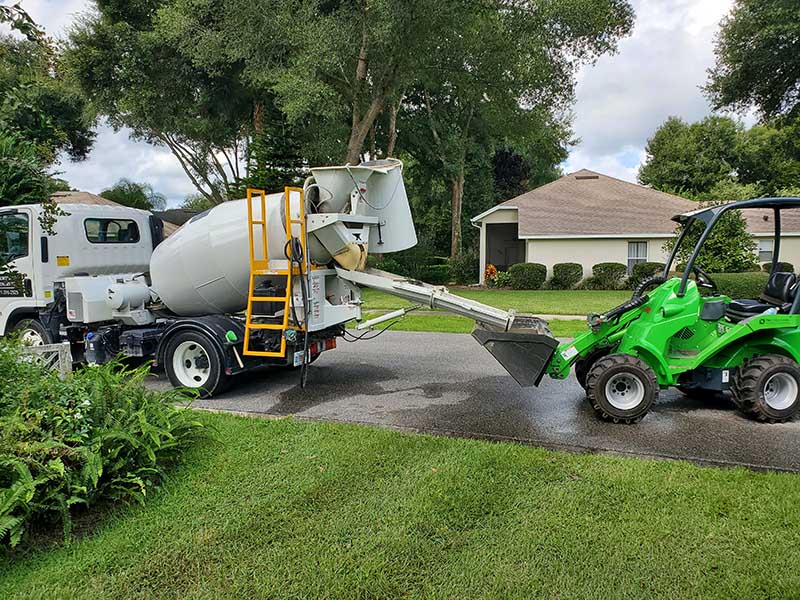
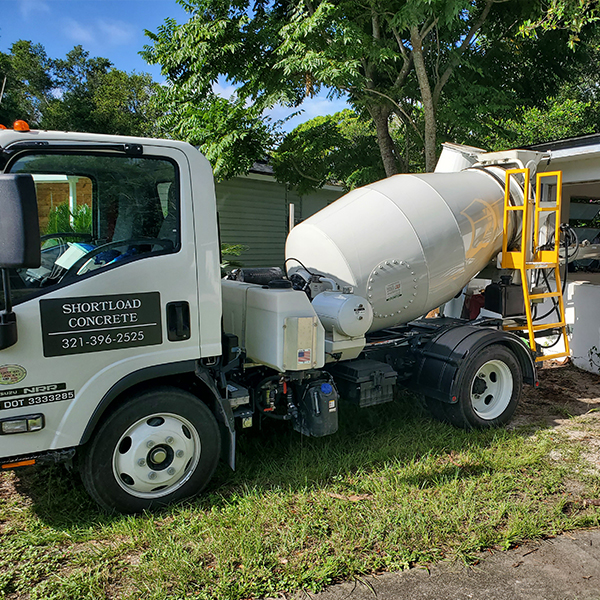
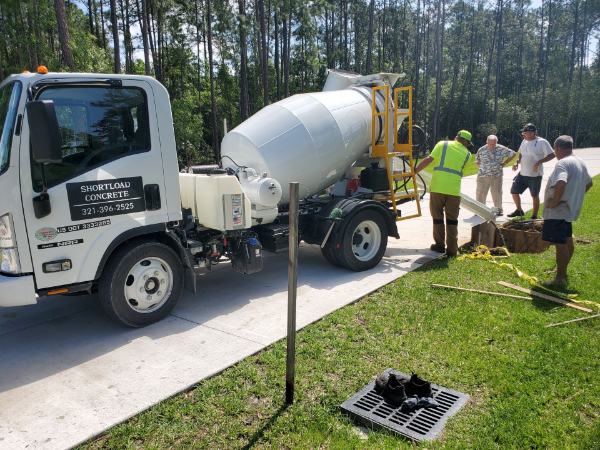
When considering the overall expenses associated with construction projects, it’s essential to understand how concrete delivery costs can impact your budget. For those interested in small-scale projects, a related article discusses the advantages of short-load concrete delivery, which can be a cost-effective solution for homeowners and contractors alike. You can read more about this topic in the article titled “Why Short Load Concrete Delivery is Perfect for Small Projects in Orlando” available at this link.
This is the base price, which is the actual cost of the material. Quotes are almost always given per cubic yard. Standard Mixes: Standard 3,000 psi (pounds per square inch) to 4,000 psi mixes are typically used for common residential projects like patios, footings, or driveways. Since they are the most popular, they are frequently the most economical. Specialty Mixes: Due to the additional admixtures or different aggregates, these mixes naturally have a higher price tag.
Do you need something with more strength, quicker curing, or particular qualities (like lightweight or self-consolidating concrete)? Consider factors like air entrainment for freeze-thaw durability or fiber mesh for crack resistance; both have an effect. Aggregates: The kind of crushed stone, gravel, or sand that is used in the mixture has an impact on the cost.
Aggregates are more accessible & less expensive in some areas than in others. Delivery charges are the other half of the equation. Remember how that concrete gets to your location. Much of the variability is related to delivery fees. Hourly Rates: From the time the truck leaves their plant until it returns, many suppliers charge an hourly rate for both the truck and the driver.
When considering the factors that influence concrete delivery cost, it’s essential to explore how contractors can optimize their expenses. A related article discusses the strategies Orlando contractors use to save money with short-load concrete delivery, highlighting practical tips and insights that can be beneficial for anyone in the construction industry. For more information on this topic, you can read the article here. Understanding these approaches can help you make informed decisions and potentially reduce your overall project costs.
Accurately estimating this can be challenging, particularly if traffic or site access causes delays. Flat Rates: A flat delivery fee per load or per trip is offered by certain businesses. If you know exactly how many loads you’ll need, this might be a more reliable choice. Distance Surcharges: If your project is far from the concrete plant, you should budget extra.
Fuel expenses & driver time quickly mount up. Minimum Load Fees: You will frequently be charged a “short load” or “minimum load” fee if you only require a small quantity of concrete, say less than a full truckload (usually 8–10 cubic yards). This pays the supplier’s expenses for dispatching a truck, regardless of the cargo.
Sometimes, even if you only need three yards, it’s the same as paying for the delivery of a full truck. The factors that affect the cost of delivering concrete. A number of other factors, in addition to the standard per-yard and delivery fees, may subtly or not so subtly increase your final bill. You can improve your planning and prevent surprises by being aware of these. Both your access & location.
There is a significant impact on your location and the ease of access to your website. Plant Proximity: Your delivery costs will probably be less the closer you are to a concrete batch plant. Long trips require more fuel and driver time.
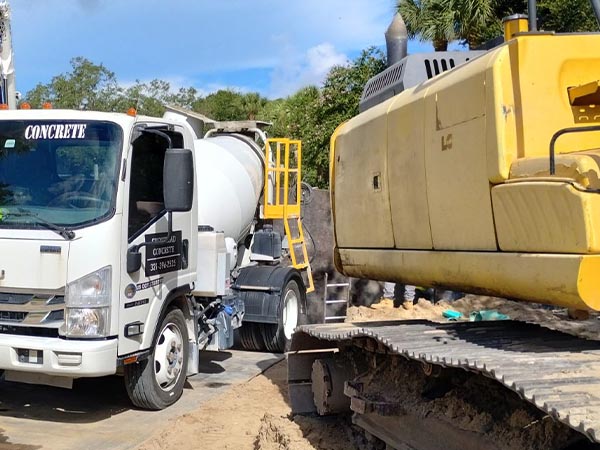
Urban versus. Rural: While rural deliveries may involve longer distances & possibly rougher roads, which could affect delivery time and truck wear, city deliveries may face traffic delays. Site Accessibility: Can a large concrete truck easily access your site? Tight turns, steep driveways, overhead obstacles (such as tree branches or power lines), or soft ground can make things difficult. You may require a pump, which is an expensive additional expense, if the truck is unable to get close enough to the pour site.
Concrete type & quantity. Concrete is not all made equal, and neither are the amounts. Mix Design: As previously indicated, the cost per cubic yard of high-strength, colored, lightweight, or fiber-reinforced mixes is higher. These call for unique aggregates, admixtures, & occasionally more intricate mixing techniques. Slump Requirements: The term “slump” describes how workable or wet concrete is.
Concrete with a higher slump, or wetter concrete, is simpler to apply but may cost more because it needs more water or plasticizers. Water added on-site without first consulting your supplier should be avoided as this could weaken the concrete. Batch Size: To avoid short load fees, most projects benefit from ordering a full truckload, which is typically 8–10 cubic yards. There may even be volume discounts available for very large projects.
On the other hand, when fixed delivery costs are taken into account, very small orders may cost disproportionately per yard. Time & Planning. The timing of your concrete needs can also affect the cost.
Rush Orders: Do you need concrete today? Orders that are placed at the last minute or that must be delivered right away may be subject to an expedited service charge. Suppliers frequently plan their trucks days ahead of time, so a last-minute change could complicate their logistics. Off-Hours Delivery: Due to overtime labor costs for the drivers and plant operators, pouring concrete early in the morning, late at night, on weekends, or on holidays may result in additional fees.
Waiting Time: Should the concrete truck arrive and require a lengthy wait (e.g. The g. suppliers frequently charge for “waiting time” or “detention fees” after a specific free grace period (usually 5–10 minutes per yard) if your crew isn’t prepared, forms aren’t set, or a pump isn’t in place. Usually, an hourly fee is applied to this.
Other Services and Equipment You May Require. Delivery of concrete involves more than just the truck arriving and emptying. There are times when you need assistance, and those hands—as well as those machines—have their own costs. Pumps of concrete. A concrete pump is essential for tasks where the truck cannot get close enough or where you must reach high places.
Boom Pumps: These use a hydraulic arm, or boom, to precisely place concrete at heights or over obstacles. Although they are more costly to rent, they are great for large or complex jobs. Concrete is moved by line pumps, also called ground pumps, which use hoses positioned along the ground. Although they require more manual handling of the hoses, they are suitable for residential patios, basements, or spaces with limited height. Rental Fees: Pumps are usually rented for a minimum of one hour or for a half-day or full day.
For a few hours, you should budget between $600 and $1,500+, plus any additional costs for longer hoses or larger booms. Remember the pump operator’s expenses! wheelbarrows. The low-tech, low-cost option. Wheelbarrows can complete the task if you have enough workers & the truck can park reasonably close.
Labor Costs: The labor required to push the wheelbarrows is more expensive than the wheelbarrows themselves. Take into account your crew’s hourly pay. Time: Because this approach is the slowest and most labor-intensive, your crew will put in more hours. unique additions and improvements. You may want your concrete to perform a bit more than just strength.
Fibers: To lessen cracking, increase impact resistance, or add more structural integrity, synthetic fibers (such as steel or polypropylene) can be added to the mixture. Coloring Agents: Pigments are added to the mixture if colored concrete is desired. These are available in a variety of hues and typically result in a considerable increase in the cost per yard. Admixtures that speed up or slow down the concrete’s setting time are called accelerators or retarders, and they are helpful for complicated pours or severe weather. Air Entrainment: By forming tiny air bubbles, air-entraining agents increase the concrete’s resistance to freeze-thaw cycles, which is crucial in cold climates.
In northern areas, it’s frequently a standard addition, but in other places, it may be an additional expense. How to Get the Best Deal and Steer Clear of Hidden Fees. Unexpected costs are disliked by all. Your concrete delivery budget can be effectively managed with a little preparation & clear communication.
Plan ahead and place precise orders. Your preparation will make the process go more smoothly. Take Accurate Measurements: Don’t estimate your concrete volume. Consult your contractor or use a calculator. A 5–10% overorder is preferable to an underorder, which would require a small, costly “short load” top-up or result in you drying out before the job is finished. Plan Ahead: Make your concrete delivery reservation at least a few days to a week in advance, particularly during the busiest construction seasons.
This guarantees truck availability & avoids rush fees. Communicate Clearly: Give the concrete supplier plenty of notice about any special mix requirements, site access issues, & your pour schedule. Recognize your quote. Investigate the specifics rather than focusing only on the sum. Line-Item Breakdown: Get a thorough quote that includes the price per cubic yard, delivery costs, minimum load fees, & any extra services or admixtures.
Make Any Extras Clear: Inquire about possible fees for waiting times, cancellations, and surcharges for lengthy trips or particular delivery windows. Get Your Quote in Writing: To prevent future misunderstandings, always get your quote in writing. Get Your Site Ready. Time and money can be saved with a well-prepared site.
Clear Access: Make sure the concrete truck has unimpeded, clear access. Move cars, trim branches, and clear away any debris that could obstruct the truck. Level Ground: Verify that the pour area and the truck’s route are both reasonably level and stable. Delays or even stuck trucks can result from soft spots.
Prepare Your Crew and Forms: Before the truck arrives, make sure your crew is prepared, your forms are set up, and the rebar is in place. You may have to pay for each minute the truck waits. Water Source: A water source close to the pour site is frequently required for cleaning equipment and occasionally for minor mix adjustments (but only under close supervision from the on-site concrete specialist). Combining Everything: A Sample Situation. Suppose you are pouring a 4-inch-thick patio that is 10 by 20 feet (200 square feet).
Figure out the volume. Area: 10 x 20 = 200 square feet.
4 inches is equivalent to 4/12 feet, or 0.333 feet. Volume: 66.6 cubic feet (200 square feet x 0.333 feet).
66.6 cubic feet divided by 27 cubic feet per yard equals 2.47 cubic yards. Order three cubic yards safely, taking into consideration a small amount of spillage or over-excavation. Calculate the price of three cubic yards of concrete.
$120 per yard is the standard 3,000 psi mix. For the concrete itself, three yards x $120 per yard equals $360.
Calculate the estimated delivery cost. For anything less than four to five yards, assume a short load fee. For a short load, let’s say the cost is two hundred dollars. Alternatively, they might charge a flat $150 delivery fee plus the hourly rate for travel and pour time if they don’t have a set short load fee.
Let’s stick with the $200 short load fee for simplicity. Total Projected Cost (Labor/Pump Excluded):. Concrete ($360) plus delivery ($200) equals $560.
This excludes the cost of your labor, tools, and finishing work, as well as any possible pump rental (if necessary), which could easily add an additional $700 to $1000+. This example provides a framework for thinking about your own project, though it isn’t universal. You can make sure your concrete delivery goes smoothly & stays within budget by being aware of these factors and making careful plans.
This will free you up to concentrate on the quality of your completed project rather than worrying about unforeseen expenses.
.
FAQs
What factors affect the cost of concrete delivery?
Factors that can affect the cost of concrete delivery include the distance from the supplier to the delivery site, the quantity of concrete needed, any additional services required (such as pumping or coloring), and the current market price of concrete.
How is the cost of concrete delivery calculated?
The cost of concrete delivery is typically calculated based on the cubic yards of concrete needed, the delivery distance, and any additional services requested. Some suppliers may also factor in the current market price of concrete and any applicable delivery fees.
Are there additional fees associated with concrete delivery?
Additional fees that may be associated with concrete delivery include charges for waiting time, overtime, weekend or holiday deliveries, and any special equipment or services required (such as pumping or coloring). It’s important to clarify these potential fees with the supplier before scheduling the delivery.
What is the average cost of concrete delivery?
The average cost of concrete delivery can vary depending on the factors mentioned earlier, but it typically ranges from $100 to $150 per cubic yard. However, prices can fluctuate based on location, market conditions, and the specific requirements of the project.
How can I find the best deal on concrete delivery?
To find the best deal on concrete delivery, it’s important to compare quotes from multiple suppliers, consider any additional services or fees that may be required for your project, and inquire about any current promotions or discounts. Additionally, scheduling deliveries during non-peak times or consolidating multiple deliveries can help reduce costs.
When you need concrete delivered in Orlando and the surrounding areas, contact Shortload Concrete Delivery.